Shravanabelagola
Bahubali Prakrit Bhawan, NIPSAR
Hassan district, Karnataka
- Manuscripts
- 2,695 granthas
- Folios
- 3,65,520
Conservation began 11 July 2025 — one of the Foundation's largest continuing efforts.
जीवन धरोहर संरक्षणIn Service of Heritage and Humanity
Manuscript Conservation
Many manuscripts have survived for centuries, but age, insects and storage conditions are making them fragile faster than they can be studied. ASSF conserves, documents and digitises palm-leaf and handwritten-paper collections, folio by folio.
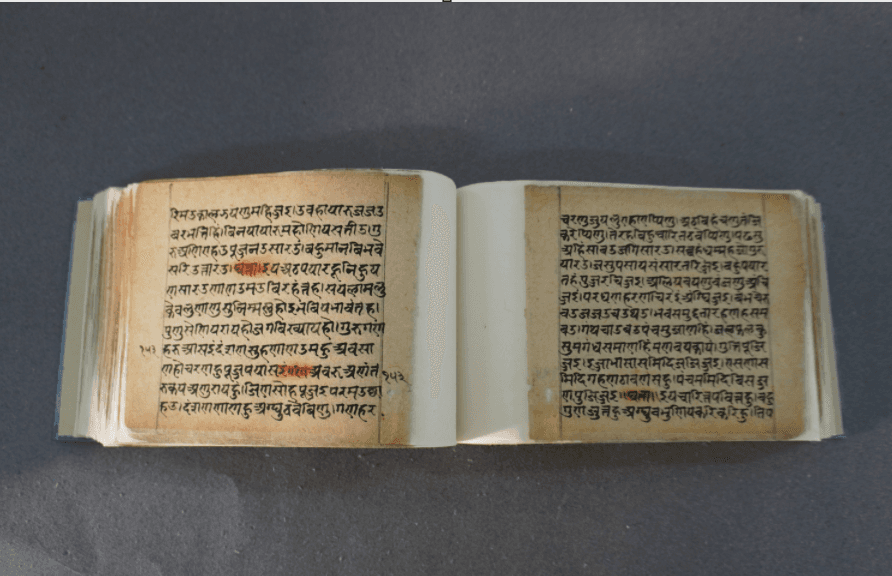
Text inscribed into prepared palm leaves and bound into units. Over time the leaf itself becomes brittle, cracks and splits — conservation has to work with, not against, that material.
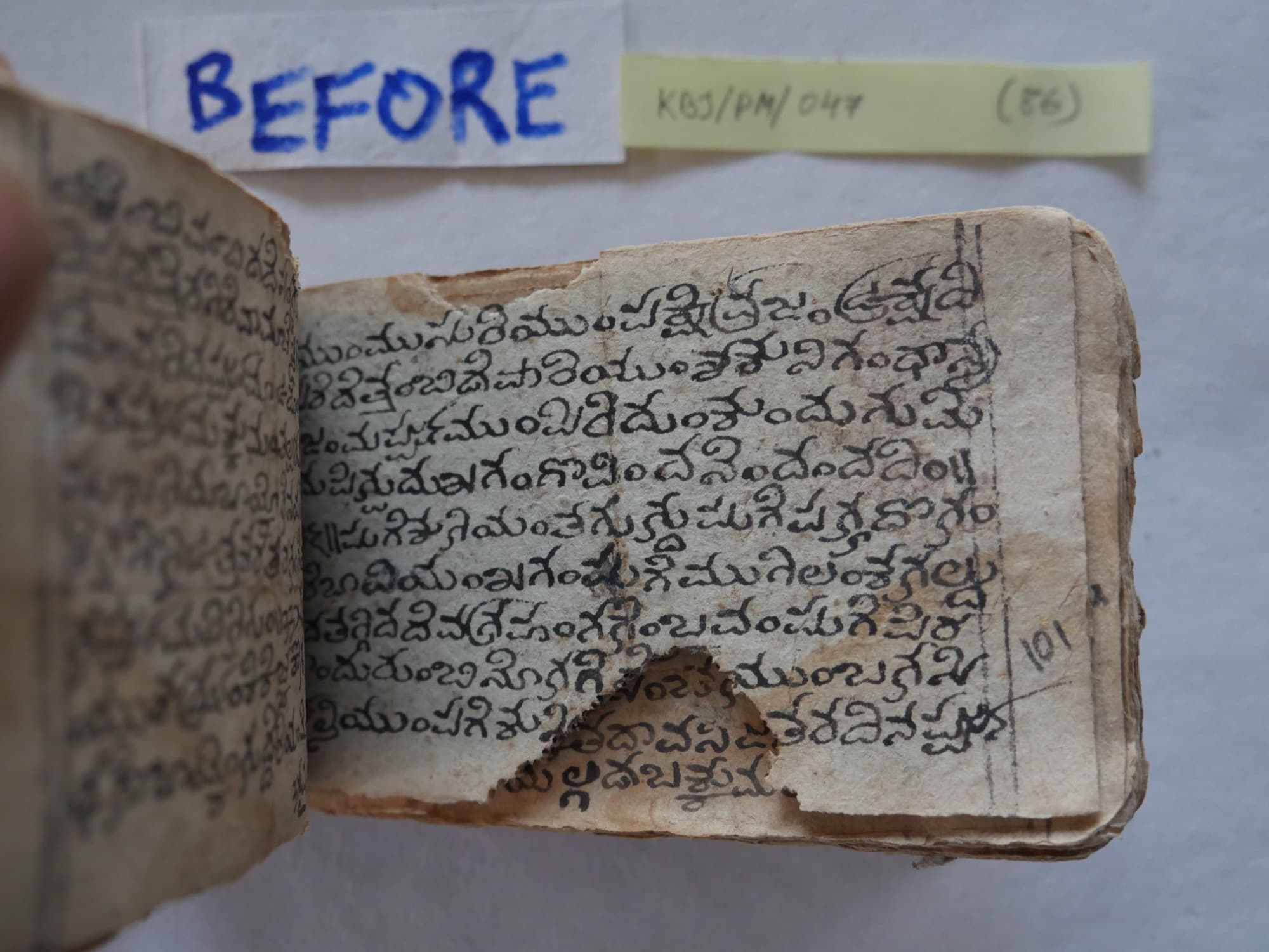
Handmade paper develops tears, folds, losses and staining, often unevenly across a single manuscript. Every folio starts with its own condition assessment.
Beyond scripture, these collections hold philosophy, mathematics, astronomy, medicine, grammar and literature — material records of an intellectual tradition, not only a religious one.
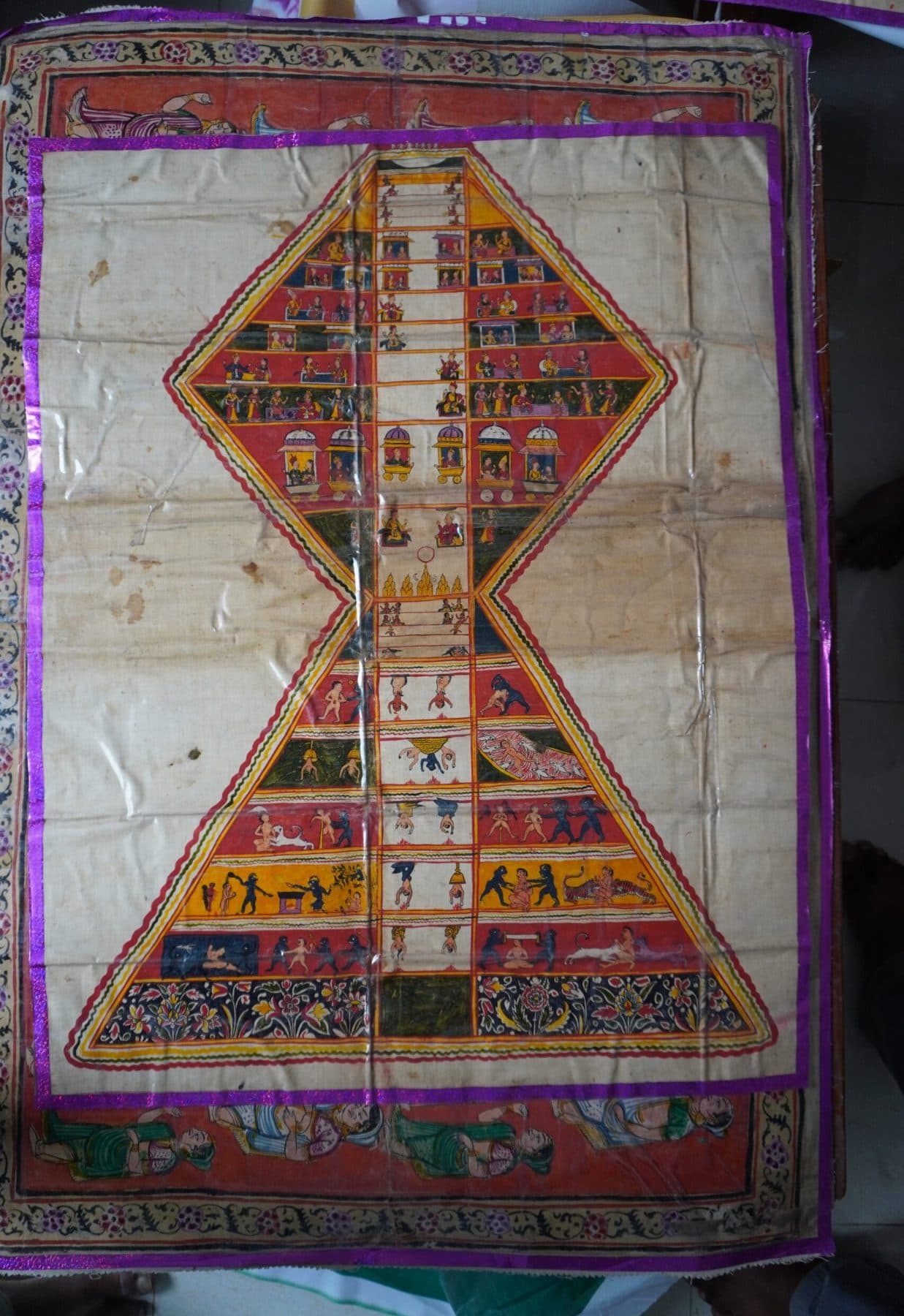
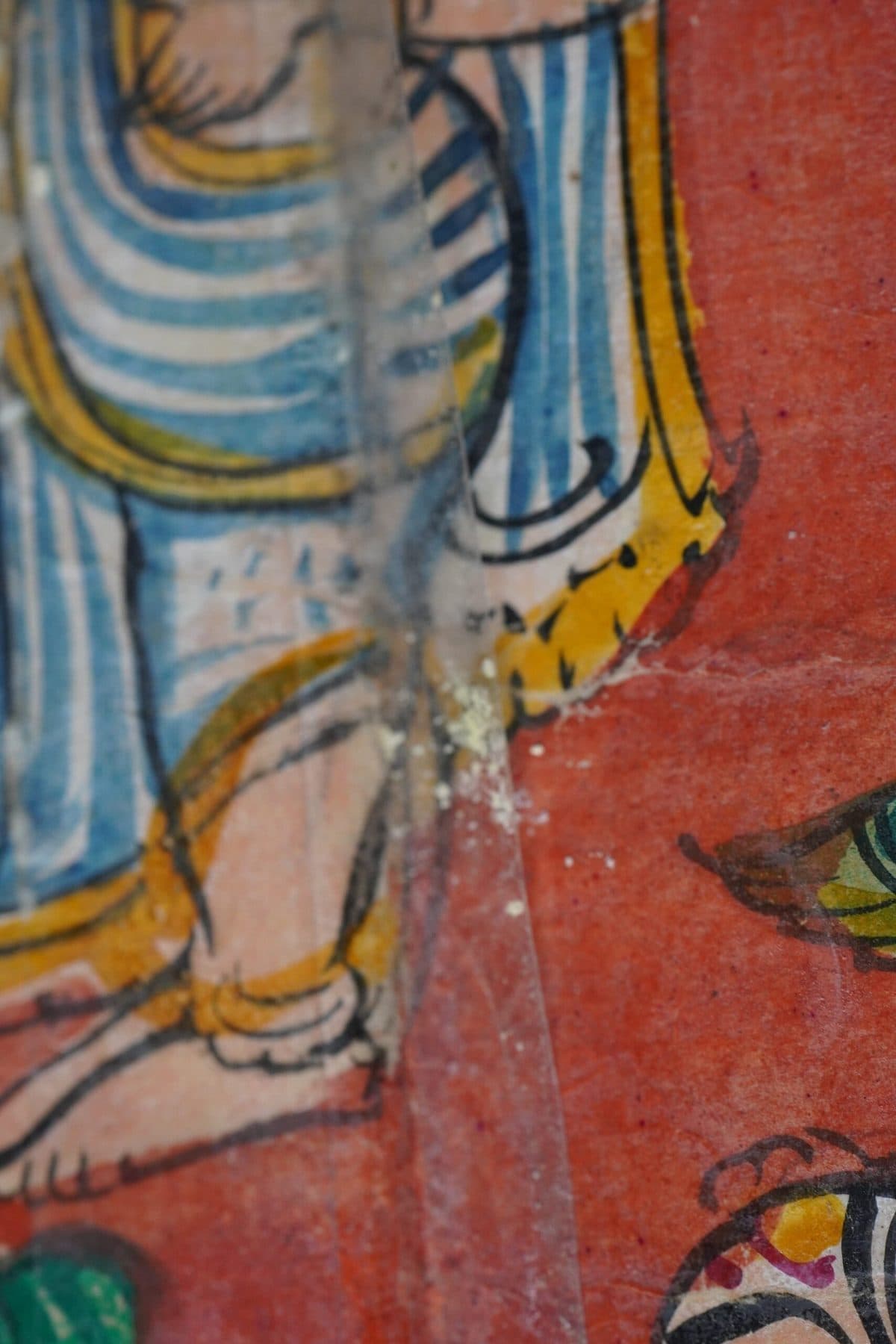
Some collections hold far more than text: folios painted beneath their lines, cloth paintings of the cosmos, whole leaves of colour. Paint cracks and lifts along every fold, so conservation has to hold the picture as carefully as the word.
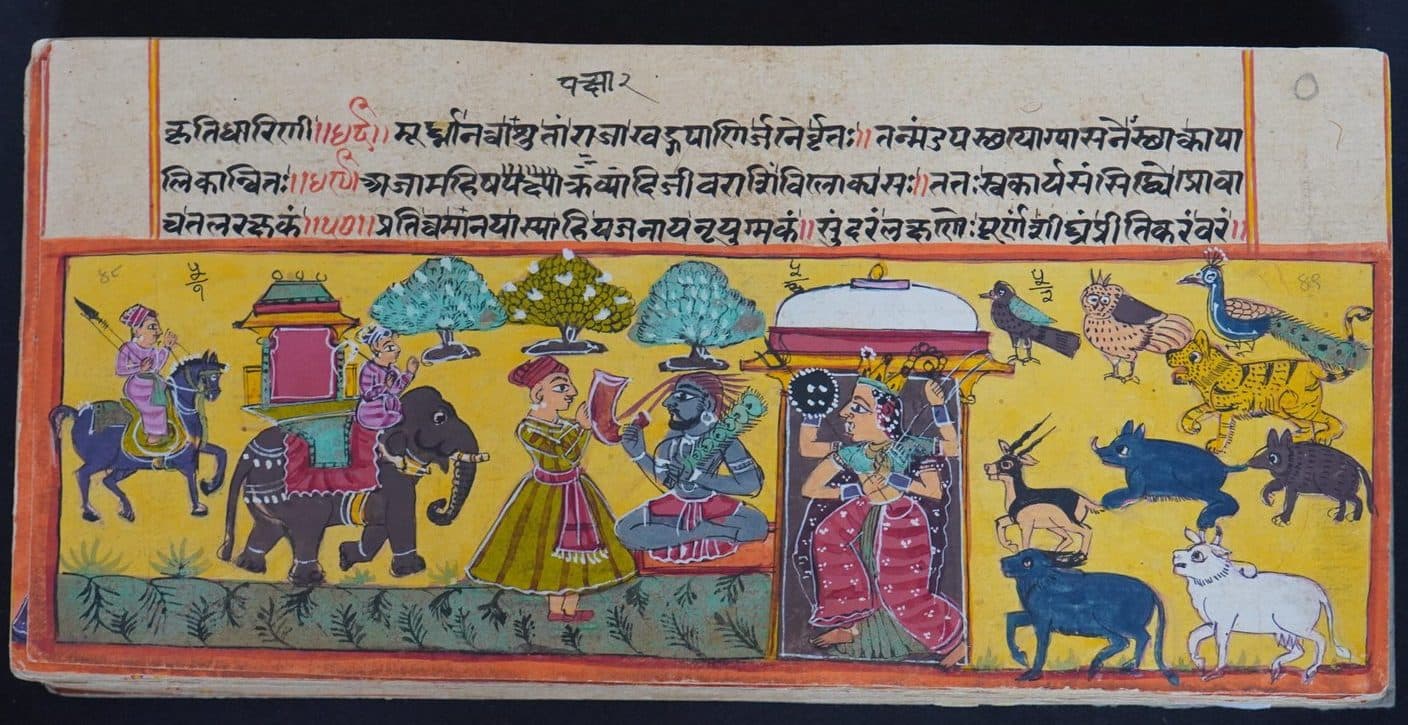
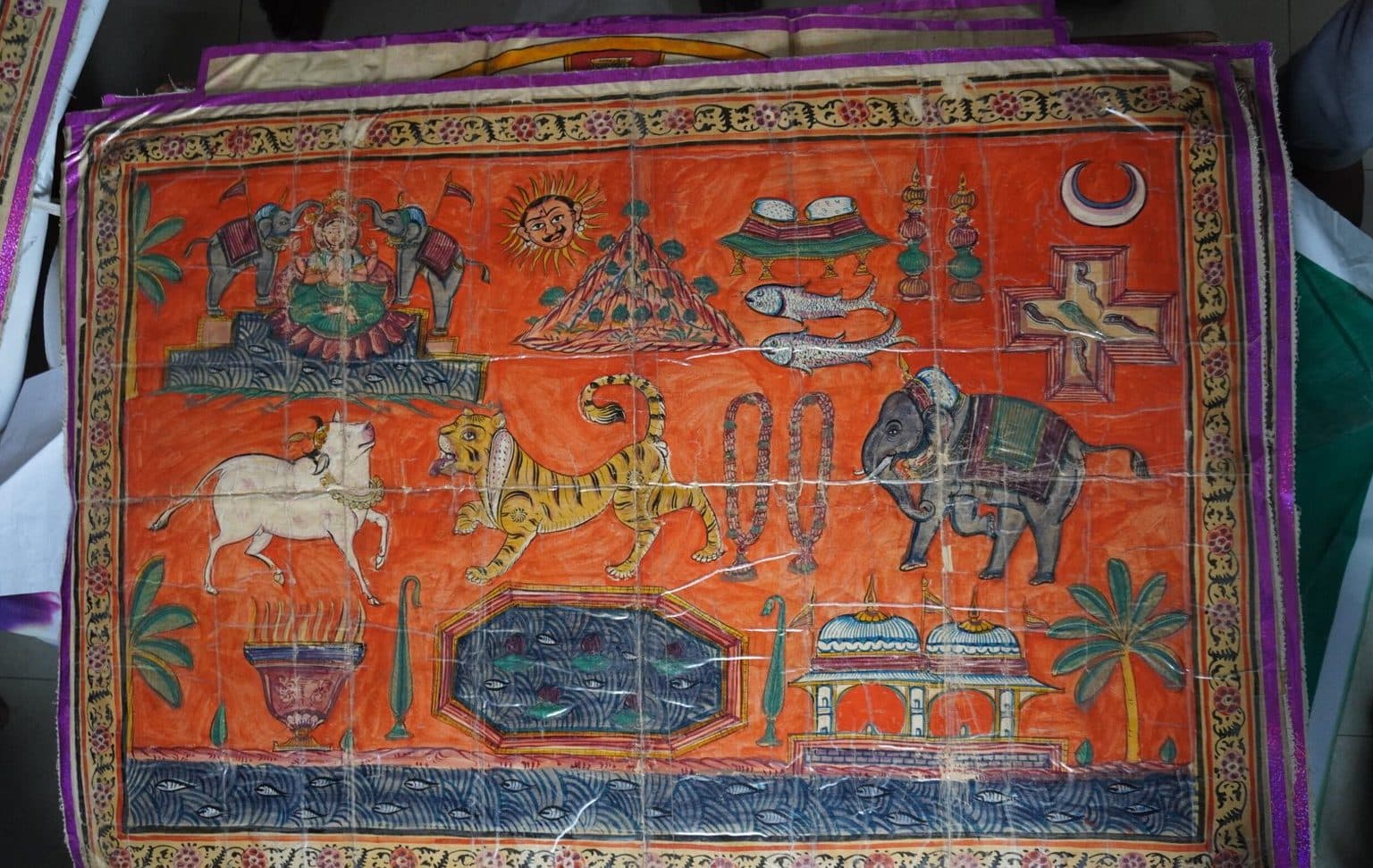
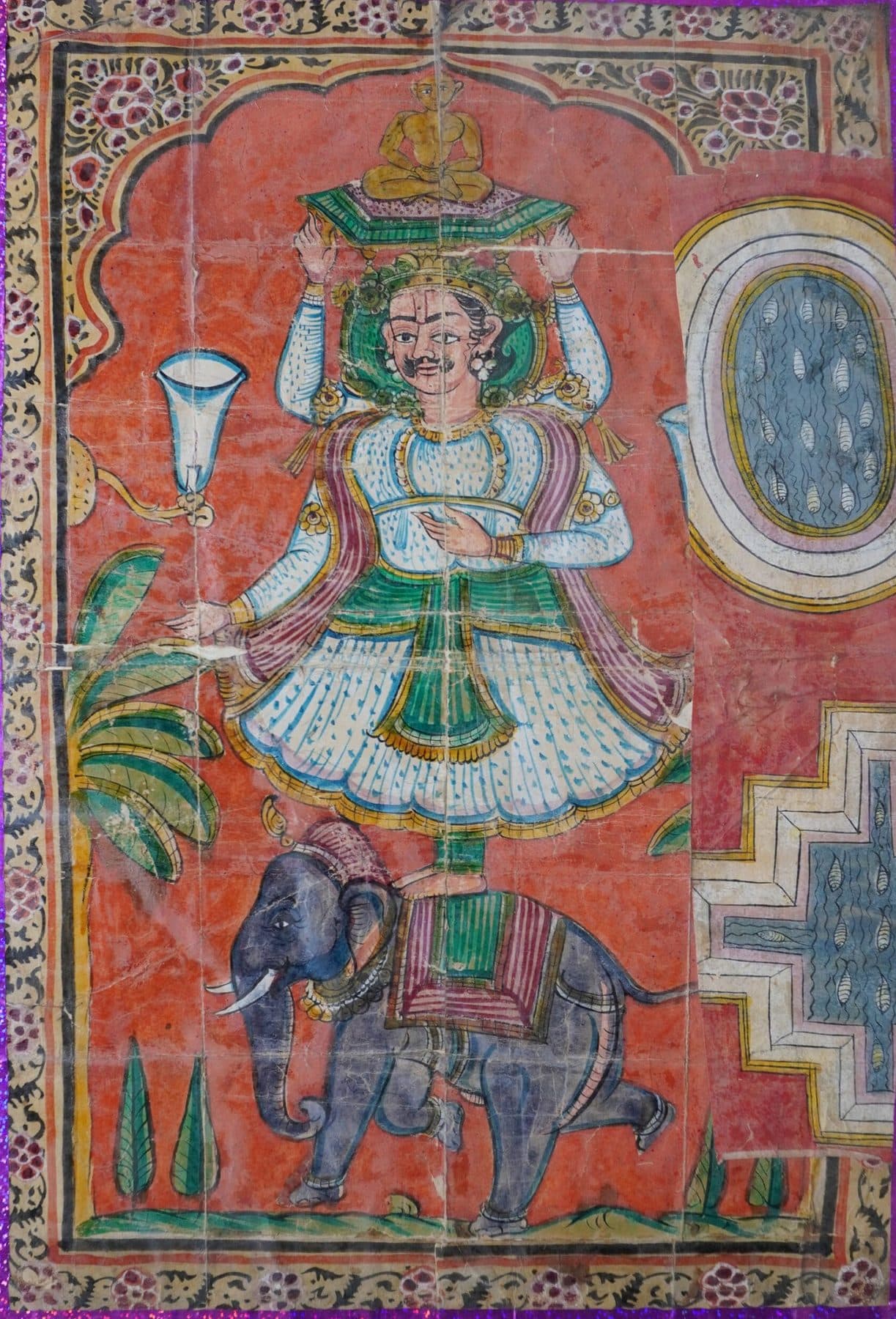
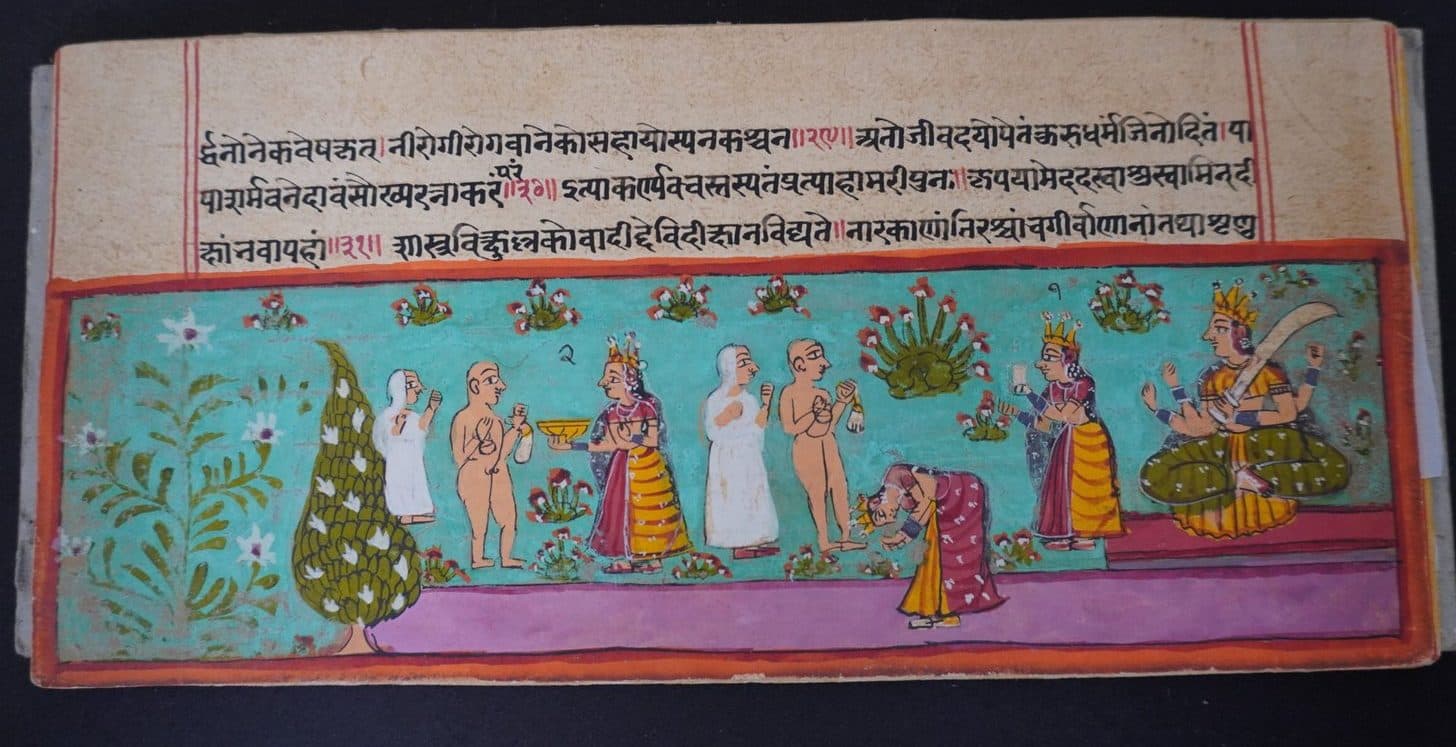
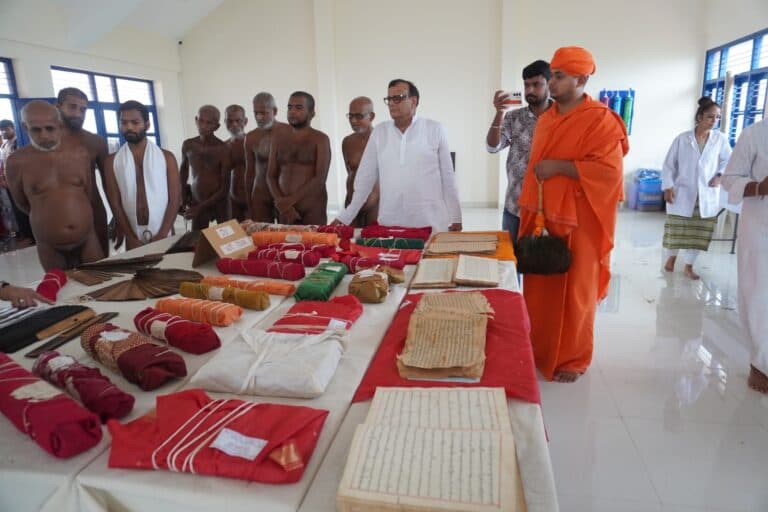
Photographed at the inauguration of the Shravanabelagola conservation programme, July 2025.
No two manuscripts are alike — sometimes no two folios. Assessment decides the approach before anything is treated.
Recording material, structure and condition before anything is touched.
Preliminary measures that make safe treatment possible.
Removing accumulated dirt with methods suited to the material.
Deacidification and chemical stabilisation, matched to the deterioration found.
Mending cracks, tears and structural loss, folio by folio.
Ensuring the material is safe for handling and long-term storage.
Archival-quality housing for the conserved manuscript.
A high-resolution digital record, so the original need not be handled again.
The Foundation's own short film on the Kumbhoj Bahubali programme — documentation, treatment and digitisation, filmed during the conservation work itself. In Hindi.
Kumbhoj, from 2022-02 to 2024-09
Karanja Lad, from 2024-10 to 2025-08
Shravanabelagola, from 2025-07, ongoing
Karanja Lad — continuing work, start date not yet supplied, ongoing
Bahubali Prakrit Bhawan, NIPSAR
Hassan district, Karnataka
Conservation began 11 July 2025 — one of the Foundation's largest continuing efforts.
Bahubali Siddhopeth Granthalaya
Kolhapur district, Maharashtra
Conserved and fully digitised, February 2022 – September 2024.
Shri Mahaveer Brahmacharyashram Gurukul Ashram
Washim district, Maharashtra
Conserved October 2024 – August 2025. A further 866 folios have since been entrusted to the Foundation for the next phase.
Shri Mulsang Balatkar Gan Mandir
Washim district, Maharashtra
Building on the completed Karanja Lad project, extending conservation to further repositories in the area.
Counts from the Foundation's two completed conservation projects and its survey of 18 repositories. Where a figure has not been supplied, the space is left open — not estimated.
ASSF employs lead conservators, assistant conservators and trainees at industry-standard terms — building long-term capacity in a field where trained conservators are scarce in India. Local institutions are trained in safe handling and preventive care, so custodians can continue looking after their own collections.